ASOC Exam Application Procedure
Amateur Station Operator Certificate – WPC, Govt. of India
This guide provides a comprehensive overview of the application process for the Amateur Station Operator Certificate (ASOC) in India, issued by the Wireless Planning & Coordination (WPC) Wing of the Ministry of Communications. Obtaining this certificate is the essential first step for anyone aspiring to legally operate an amateur (ham) radio station in India.
Understanding the Amateur Station Operator Certificate (ASOC)
1
Issuing Authority
The ASOC is officially issued by the Wireless Planning & Coordination (WPC) Wing within the Ministry of Communications, Government of India. This is the sole regulatory body responsible for managing the radio spectrum and licensing in the country.
2
Legal Requirement
Possession of an ASOC is a mandatory legal requirement for anyone wishing to operate an amateur (ham) radio station within India. Operating without this certificate is illegal and can lead to severe penalties.
3
Two Grades Available
The ASOC examination is offered in two distinct grades: the Restricted (R) Grade and the General (G) Grade. Each grade grants different operating privileges and requires a specific level of technical knowledge.
Understanding these fundamental aspects of the ASOC is crucial before embarking on your journey to become a licensed amateur radio operator.
Eligibility Criteria for ASOC Examination
Minimum Age
Applicants must be at least 12 years of age on the date of application. There is no upper age limit for aspiring amateur radio operators.
Citizenship
Only Indian citizens are eligible to apply for the ASOC. Proof of Indian nationality will be required during the application process.
No Formal Education
Crucially, there are no formal educational qualifications required to appear for the ASOC examination. This makes amateur radio accessible to a wide range of enthusiasts, regardless of their academic background.
These broad eligibility criteria ensure that many individuals can pursue their interest in amateur radio. The emphasis is on practical knowledge and understanding of regulations rather than academic degrees.
Essential Documents for ASOC Application
Gathering and preparing the correct documents is a critical step in the ASOC application process. Ensure all documents are clear, legible, and properly attested.
Identity Proof
Accepted documents: Aadhaar Card, Passport, Driving License, or any other government-issued photo ID. Ensure the name and date of birth match other records.
Address Proof
Accepted documents: Aadhaar Card, Voter ID, Passport, or recent utility bills (electricity, water, telephone) in the applicant's name (not older than 3 months).
Nationality Certificate
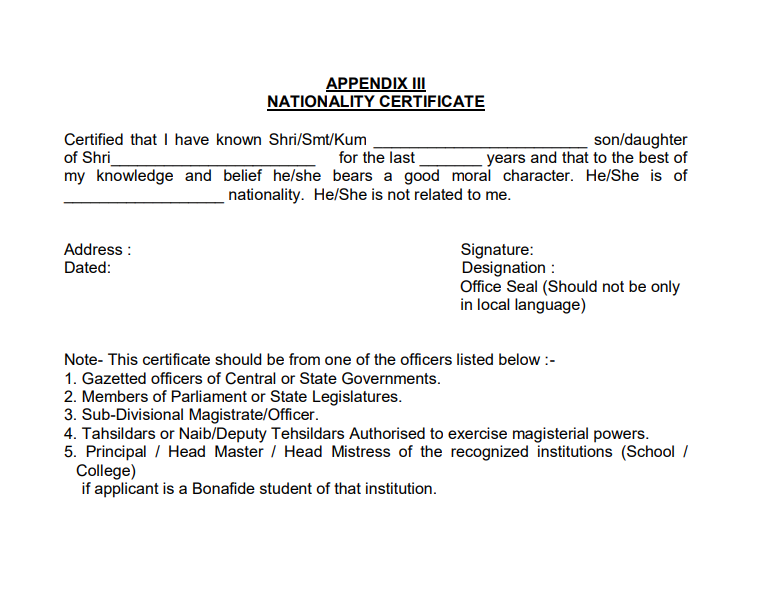
This must be obtained in the specific WPC format. It usually requires attestation and can be downloaded from the Saral Sanchar portal or WPC website.
PAN Card
Applicant's PAN Card is required. For minor applicants, the PAN Card of the guardian is acceptable.
Digital Photograph
A recent passport-size photograph in digital format (JPEG) with a plain background. Ensure it's clear and meets specified dimensions.
Scanned Signature
A clear scanned image of the applicant's signature (JPEG format).
Attestation
All documents must be attested by a Gazetted Officer. This is a crucial step; un-attested documents will lead to rejection.
WPC Nationality Certificate Format
This is the specific format required by WPC for ASOC applications, and note that it must be properly filled and attested by a Gazetted Officer as specified in the certificate.
Step-by-Step ASOC Application on Saral Sanchar Portal
The application process is entirely online through the Saral Sanchar portal, designed for ease and efficiency.
Visit Saral Sanchar Portal
Navigate to the official WPC Saral Sanchar portal: https://saralsanchar.gov.in. This is the central hub for all WPC-related online services.
Create Your Account
If you are a first-time user, register by creating an account. This requires a valid mobile number and email ID for verification and all future communications.
Select ASOC Exam Application
Once logged in, look for the "Amateur Station Operator Certificate (ASOC)" section and initiate a new application for the examination.
Fill Details & Choose Centre
Carefully fill in all personal details as per your documents. Select your preferred examination centre from the available list.
Upload Scanned Documents
Upload the scanned copies of all required documents (identity, address, nationality, PAN, photo, signature). Ensure they are in the correct format (PDF/JPEG) and within specified size limits.
Pay the Examination Fee
A non-refundable examination fee of ₹100 is to be paid online through the portal. Various digital payment options are usually available.
Download Acknowledgement
After successful submission and payment, download and save the acknowledgement receipt. This is proof of your application.
Keep a close watch on your registered email for further communications regarding your application status and exam date.
ASOC Examination Pattern: Restricted vs. General Grade
The ASOC examination is structured differently for the Restricted and General Grades, reflecting the varying levels of expertise and privileges.
Restricted Grade (R)
- Written Test: Focuses on fundamental concepts of amateur radio, basic electronics, and operational procedures. Questions cover safety, basic radio theory, and the relevant sections of Indian Wireless Telegraphy (Amateur Station) Rules, 1978.
- Regulations: Basic knowledge of rules and regulations governing amateur radio operation in India.
- No Morse Code: Unlike the General Grade, there is no Morse Code proficiency test required for the Restricted Grade. This makes it an ideal entry point for beginners.
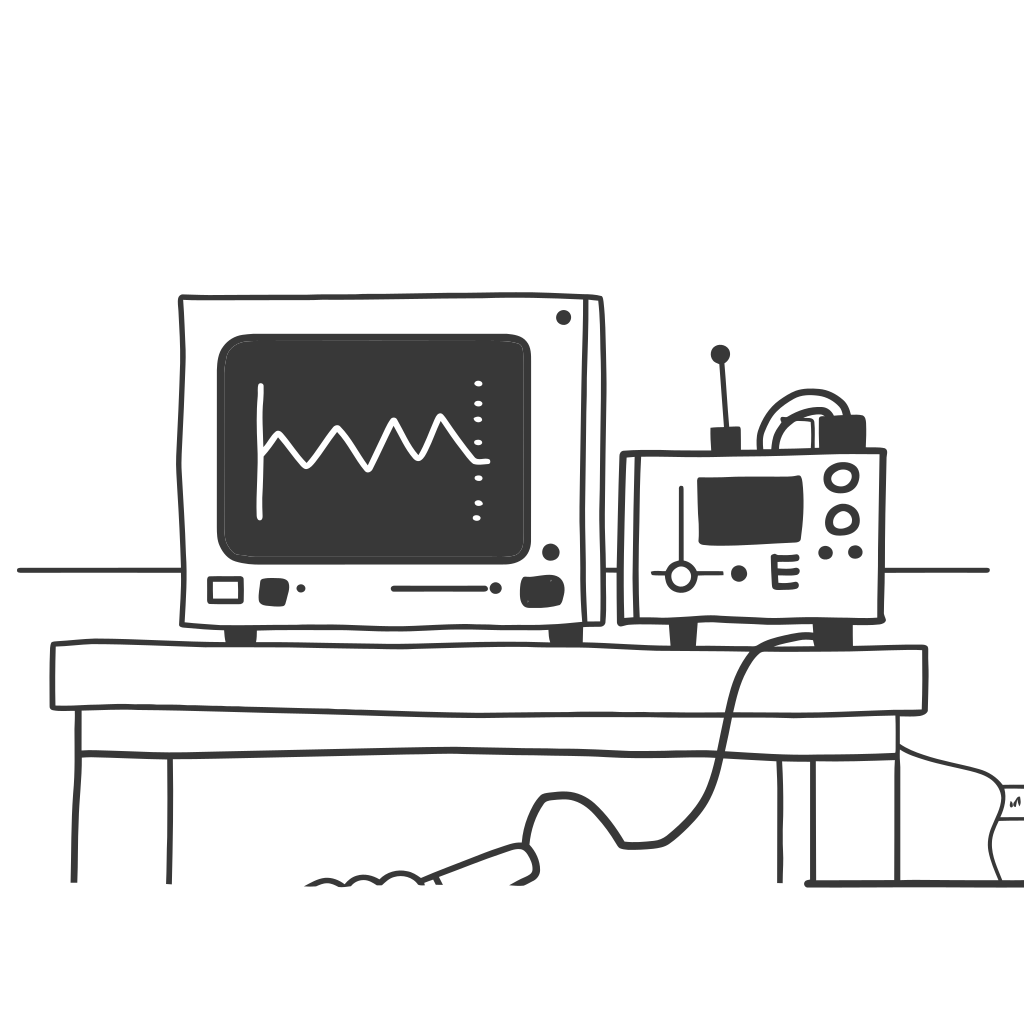
The Restricted Grade is designed for new entrants who primarily wish to operate on VHF/UHF bands or engage in local communication.
General Grade (G)
- Written Test: More advanced questions on radio theory, antenna systems, propagation, and complex electronics. A deeper understanding of the Indian Wireless Telegraphy Rules is expected.
- Regulations (Advanced): Comprehensive knowledge of regulations, including international amateur radio guidelines and advanced operational protocols.
- Morse Code (8 WPM): A mandatory test on sending and receiving Morse Code at a speed of 8 Words Per Minute (WPM). This is a significant differentiator and requires dedicated practice.
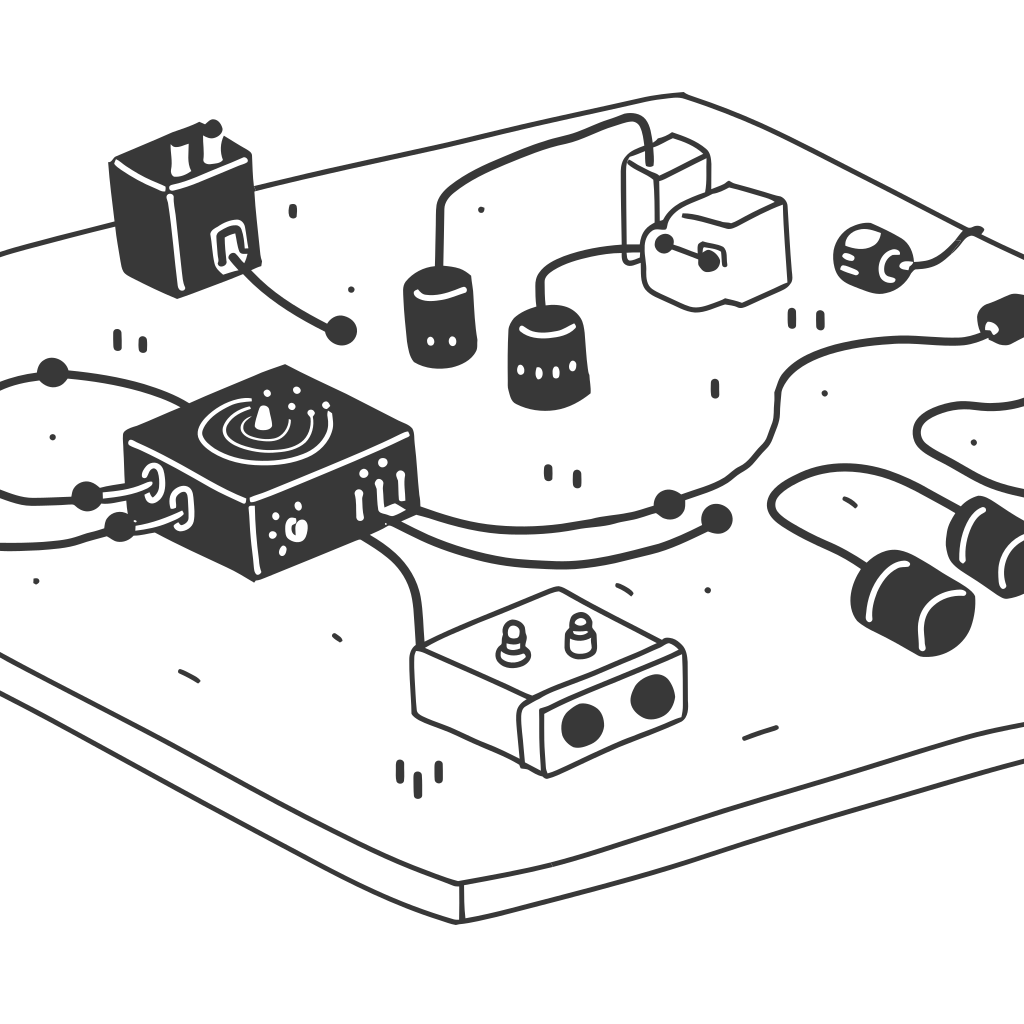
The General Grade is for those who aspire to operate on High Frequency (HF) bands, communicate internationally, and engage in advanced modes of operation.
Operating Privileges: General vs. Restricted Grade
The grade of your ASOC significantly determines the operating privileges you receive, particularly concerning transmission power and accessible frequency bands.
As evident from the table, the General Grade offers significantly broader privileges, particularly in terms of power output for HF operations and access to a wider range of bands, including the 5.8 GHz band for experimental purposes. The higher power limit for HF in General Grade (400W) allows for much more reliable long-distance communication compared to the Restricted Grade's 50W. The requirement for Morse Code in General Grade is a key skill for global amateur radio communication.
Emission Norms: Modes of Operation by Grade
Beyond power and bands, the ASOC grade also dictates which types of emissions (modes of communication) an operator is permitted to use. This chart outlines the approved emission types for each grade.
The General Grade significantly expands the range of permitted emission modes, including CW (Morse Code), RTTY (Radio Teletype), and Facsimile (image transmission). This reflects the advanced technical knowledge required for the General Grade, enabling operators to engage in a wider variety of digital and traditional communication methods. Restricted Grade operators are primarily limited to voice modes (AM, SSB, FM) suitable for local and regional communication.
Key Points for a Smooth ASOC Application
To ensure a successful application for your Amateur Station Operator Certificate, keep these crucial reminders in mind:
Document Attestation is Paramount
Always ensure all required physical documents are attested by a Gazetted Officer before scanning and uploading. This is a non-negotiable requirement and a common reason for application rejection. Double-check that the attestation is clear and legible.
Clear Scanned Copies
Upload high-quality, clear scanned copies of your documents. Blurred, dark, or incomplete scans can lead to processing delays or rejection. Prefer PDF format for multi-page documents and JPEG for single images like photographs and signatures.
Apply Early – Factor in Verification Time
The WPC verification process can take time, sometimes weeks or even a few months, depending on the volume of applications and administrative procedures. Do not wait until the last minute if you have a specific timeframe for taking the exam.
Maintain Records of All Submissions
Keep digital and, if possible, physical copies of your application form, acknowledgement receipt, and all uploaded documents. This will be invaluable for future reference or in case of any queries.
License Validity and Renewal
Once issued, your ASOC license is valid for 20 years. It is renewable upon expiry, provided you meet the prevailing renewal guidelines. Mark your calendar for renewal well in advance.
Adhering to these guidelines will significantly streamline your ASOC application process and bring you closer to becoming a licensed amateur radio operator in India. Good luck with your journey!
Understanding Your ASOC Callsign & Key Legislative Update
Your Amateur Station Operator Certificate (ASOC) comes with a unique callsign, a distinct identifier for your station. India has recently updated its callsign series and introduced new telecommunication regulations that significantly impact amateur radio operations.
New Callsign Series
The Ministry of Communications has implemented new callsign series for both General and Restricted Grade ASOC holders:
General Grade
New callsigns follow the format VU22XX to VU29XX, where 'XX' are two alphabets (e.g.,
VU22DX).Restricted Grade
New callsigns follow the format VU33XX to VU39XX, where 'XX' are two alphabets.
Applicants now have the option to choose from a list of available callsigns based on their preferences during the application process.
Key Legislative Update: The Telecommunications Act, 2023
A major development for amateur radio in India is the replacement of the outdated Indian Telegraph Act, 1885, with The Telecommunications Act, 2023. This modern legislation, which received presidential assent on December 24, 2023, aims to streamline and update regulations for telecommunication services and networks in the country.
Telecommunications (Amateur Services) Rules, 2024 — Key Updates
These new rules, in force upon Gazette publication, replace the 1978 rules and govern various aspects of amateur radio operation:
Framework & Scope
Replaces the 1978 rules, issued under The Telecommunications Act, 2023. In force on publication in the Gazette.
Grant & Validity (Rule 6)
- ASOC (General) or (Restricted) issued by DoT/WPC upon passing the exam with a unique callsign.
- Fees: ₹1,000 for 20 years for General Grade; ₹2,000 for lifetime (until holder turns 80 years) for General Grade.
- Payment Window: Must pay for the certificate within 2 years from result date, or re-appear for the exam.
- Foreign/Visa Cases (Rule 4(2)): ASOC may be co-terminus with visa or 12 months, whichever is less.
General Conditions (Rule 7)
- Operate only on bands, emissions, and power specified for your grade. General Grade permits more emission types and higher power.
- No separate import authorization is needed for amateur radio equipment.
- Government may modify/vary/cancel conditions by written notice or via the portal.
- Duplicate ASOC / change of station location fee: ₹1,000.
- Mandatory communications during natural calamities/disasters when requested by Government, without charge.
- May be permitted to operate on board Indian ships upon specific request.
Renewal (Rule 8)
- Apply ≥12 months before expiry through the portal.
- Late renewal up to 2 years after expiry incurs a ₹1,000 late fee. No renewal after this window.
- Lifetime ASOC can be extended in 10-year blocks without additional fees on request.
Suspension / Cancellation (Rule 9)
Grounds include violation of conditions/rules, ITU regulations, or providing false information; due process applies.
Fees: No Refund (Rule 10)
No compensation or refund for suspension/cancellation or for any modification/variation of terms.
Transfer / Surrender (Rule 11)
ASOC is non-transferable. You may surrender it anytime; no refund will be provided.
Amateur Society (Rule 12)
- Minimum 4 ASOC holders may apply via portal to form a society; fee ₹2,000.
- One member designated custodian; Government issues society callsign; valid 20 years or co-terminus with custodian’s ASOC, whichever is less.
- Notify changes (member leaves / custodian change) within 30 days; validity requires ≥4 members.
Special Call Signs (Rule 13)
Fee ₹200; apply ≥90 days before the event; validity 90 days from event start; re-apply if the event continues.
Portal / Digital Implementation (Rule 15)
The Government will notify a portal for end-to-end digital handling of applications, exam details, results, ASOC grant, and other permissions.
These updated rules reflect a move towards a more digital and streamlined process for amateur radio licensing in India, aligning with modern telecommunication practices.